President Trump’s administration has drawn a hard line against Iranian influence in Iraq by threatening crippling sanctions unless Baghdad abandons its nomination of Iran-aligned former Prime Minister Nouri al-Maliki, marking a decisive reassertion of American interests in the Middle East after years of Biden-era weakness.
Story Highlights
- Trump administration issued February 27 deadline demanding Iraq withdraw Maliki’s nomination or face sanctions on critical economic institutions
- Maliki, who governed Iraq from 2006 to 2014 and is perceived as Iran-aligned, defiantly refuses to withdraw despite mounting pressure
- Threatened sanctions target Iraq’s Central Bank and State Organization for Marketing of Oil, risking economic destabilization
- The standoff represents Trump’s broader strategy to roll back Iranian regional dominance that expanded during Biden years
Trump Draws Red Line Against Iranian Proxy
The Trump administration confronted Iraq’s ruling Shiite coalition with an unambiguous ultimatum in late February 2026: withdraw the nomination of Nouri al-Maliki for prime minister or face severe economic consequences. US Special Envoy Tom Barrack delivered the message directly during visits to Baghdad and Erbil, setting a February 27 deadline for Iraq’s Coordination Framework to reconsider its candidate. The State Department outlined potential sanctions on Iraq’s Central Bank, the State Organization for Marketing of Oil, and security sectors if the Iran-aligned former prime minister proceeds toward office.
Maliki’s Controversial Record Raises Alarms
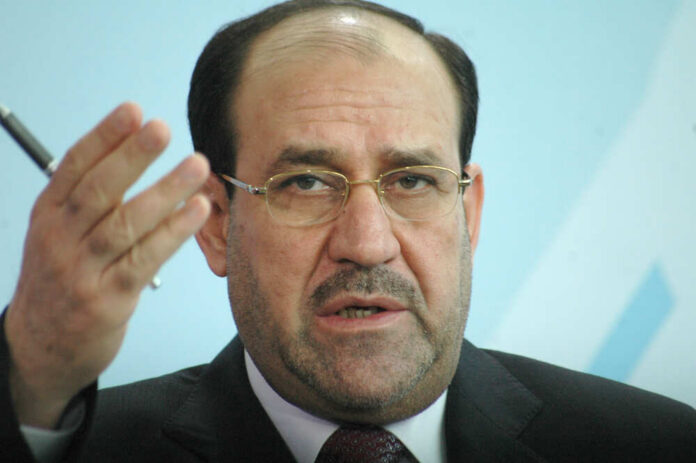
Nouri al-Maliki served as Iraq’s prime minister from 2006 to 2014, a tenure marked by accusations of authoritarian governance and sectarian policies that alienated Sunni populations. Critics argue his consolidation of power and marginalization of Sunnis created conditions that enabled ISIS’s emergence and territorial gains across Iraq. Trump himself publicly opposed Maliki’s candidacy on January 27, warning via Truth Social that the United States would “no longer help Iraq” if Maliki returned to power. This represents precisely the kind of clarity and defense of American interests that disappeared under Biden’s accommodationist foreign policy toward Iran.
Defiance Meets American Resolve
Maliki responded to US pressure with defiant declarations of Iraqi sovereignty, stating on February 24 that he has “absolutely no intention of withdrawing out of respect for my country, its sovereignty, and its will.” He insists that centralized military control aligns with US demands, attempting to reassure Washington while maintaining his candidacy. On February 28, after the deadline passed, Maliki met with US Ambassador Barrack in Baghdad, reaffirming his commitment to seeking office. This standoff tests whether Trump’s reassertion of American power can effectively counter Iranian influence or whether Iraq will align more closely with Tehran at the cost of Western support.
Economic Leverage and Regional Stakes
The threatened sanctions carry substantial weight for Iraq’s fragile economy. Targeting the Central Bank would disrupt Iraq’s banking system and international financial transactions, while sanctions on the State Organization for Marketing of Oil could affect global oil supplies and devastate Iraqi government revenues. Iraq’s government formation process has stalled since parliamentary elections in November 2025, with the Coordination Framework divided over whether Maliki’s nomination justifies risking American economic retaliation. Some coalition members, including leader Bahaa al-Araji of the Reconstruction and Development Alliance, have urged reconsideration, recognizing that international opposition creates genuine obstacles to securing economic and security support.
Iran’s Shadow and America’s Response
The confrontation reflects the broader competition between the United States and Iran for influence in Iraq since the 2003 removal of Saddam Hussein. Iraqi leaders have historically attempted to balance relationships with both neighboring Iran and the United States, a delicate position that became increasingly untenable as Biden’s weak approach emboldened Tehran throughout the region. Trump’s direct involvement and willingness to impose concrete costs for Iranian alignment represents a strategic shift from diplomatic accommodation to assertive defense of American interests. The outcome will signal whether the United States can effectively constrain Iranian dominance in Baghdad or whether Iraq will drift further into Tehran’s orbit. This matters not just for regional stability but for American credibility worldwide after four years of perceived retreat under Biden’s leadership. The choice before Iraq’s parliament is stark: accept economic consequences of defying American concerns or acknowledge that alignment with Iran carries real costs when America has leadership willing to defend its interests.
Sources:
Iraq’s Maliki defends PM candidacy, seeks to reassure US – France 24
Iraq to settle PM nominee next week after reported US deadline – The New Arab
US threatens Iraq with sanctions over Maliki nomination – The Jerusalem Post
US threatens to reassess Iraq relationship if Maliki becomes PM – Al-Hurra
Maliki says has ‘absolutely no intention’ to withdraw PM candidacy – Asharq Al-Awsat
Maliki meets with US envoy amid pressure to drop candidacy – Rudaw
Why Trump’s Criticism of Maliki Strengthens Him in Iraq – War on the Rocks
Under US pressure, Iraq’s ruling Shiite alliance edges towards break with Maliki – Amwaj Media
Maliki’s candidacy sparks US-Iran proxy conflict in Iraq – Russian International Affairs Council