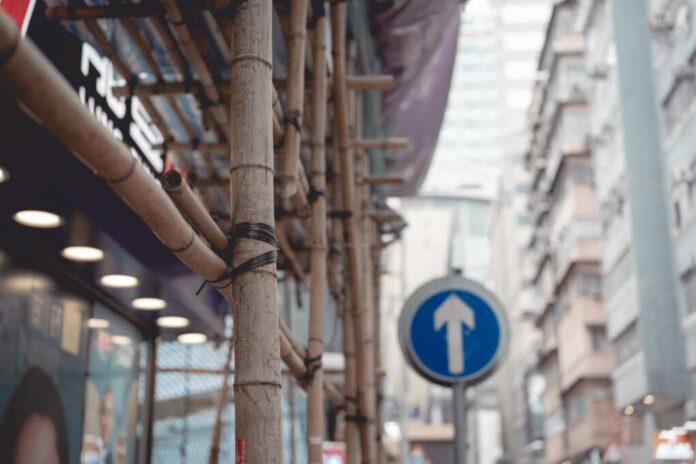
A catastrophic high-rise fire in Hong Kong has exposed deadly flaws in construction safety protocols, claiming at least 36 lives with 279 people still missing as bamboo scaffolding accelerated the blaze across seven residential towers.
Story Highlights
- Fire originated from bamboo scaffolding on 32-story tower, spreading rapidly across seven buildings in Tai Po housing complex
- 36 confirmed deaths including one firefighter, with 279 residents still missing and 900 evacuated to temporary shelters
- Level 5 alarm activated—Hong Kong’s highest emergency level—deploying 140+ fire trucks and 60+ ambulances
- High temperatures and falling debris preventing full rescue operations as search continues for missing residents
- Investigation launched into construction safety failures involving bamboo scaffolding Hong Kong planned to phase out
Deadly Construction Materials Fuel Multi-Building Inferno
The fire erupted mid-afternoon on November 26, 2025, at external bamboo scaffolding surrounding a 32-story tower in the Tai Po district housing complex. Construction netting and traditional bamboo scaffolding—common in Hong Kong renovation projects—acted as accelerants, enabling rapid flame spread across multiple buildings. The complex housed approximately 4,800 residents in eight buildings constructed during the 1980s, with extensive renovation work underway when disaster struck.
Emergency Response Overwhelmed by Scale of Disaster
Hong Kong authorities activated a Level 5 alarm—the territory’s highest emergency designation—mobilizing massive resources including over 140 fire trucks and 60 ambulances. Deputy Director Derek Armstrong Chan described severe operational challenges: “Debris and scaffolding of the affected buildings is falling down. The temperature inside the buildings concerned is very high. It’s difficult for us to enter the building and go upstairs to conduct firefighting and rescue operations.” One 37-year-old firefighter died in the rescue effort, with another treated for heat exhaustion.
Government Investigation Targets Construction Safety Failures
Chief Executive John Lee confirmed authorities established a dedicated investigation team involving police and fire services to determine the fire’s cause. The timing proves particularly concerning given Hong Kong’s government had already indicated plans to phase out bamboo scaffolding for public projects earlier in 2025. This disaster underscores the urgency of implementing modern safety standards and eliminating outdated construction practices that endanger public safety in high-density residential areas.
Massive Humanitarian Crisis as Hundreds Remain Missing
Beyond the 36 confirmed fatalities, 279 people remain unaccounted for, creating an unprecedented search and rescue challenge. Approximately 900 residents were evacuated to temporary shelters managed by district officials, while 29 others required hospitalization for injuries. The scale of missing persons suggests the death toll may rise significantly as rescue operations continue. This represents Hong Kong’s deadliest fire disaster since the 1996 Kowloon commercial building fire that killed 41 people, potentially surpassing that tragedy once all victims are recovered.
🚨 Massive deadly fire engulfs Hong Kong public estate
Wang Fuk Court, Tai Po: 2,000 units, 4,000+ residents
Flammable bamboo scaffolding (used for renovation) let flames jump between 7 towers in minutes
13 dead and risingGovernment announced ban on bamboo scaffolding earlier… pic.twitter.com/UYowVD2tZI
— Breaking News (@TheNewsTrending) November 26, 2025
Sources:
Death toll in Hong Kong high-rise fire rises to 36, with 279 people reported missing