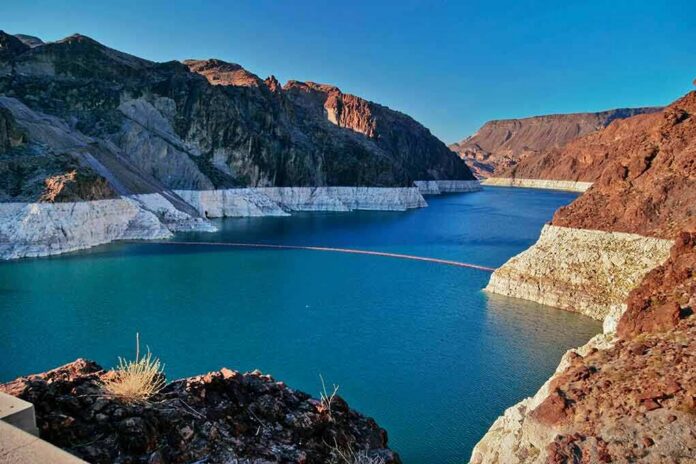
Lake Powell dropped to 3,519.91 feet, a new record low that pushes Glen Canyon Dam closer to losing hydropower.
Story Highlights
- Federal data show Lake Powell set a new record low of 3,519.91 feet.
- The level sits within about 30 feet of Glen Canyon Dam’s hydropower cutoff.
- U.S. officials cut releases to protect the system, tightening water for downstream users.
- California and the Southwest face higher power costs and tighter supplies if declines continue.
Record Low Confirmed by Federal Reservoir Data
U.S. Bureau of Reclamation data showed Lake Powell reached 3,519.91 feet on August 15–16, 2026, breaking the prior record of 3,519.92 feet set in April 2023. Major outlets, including CNN and Reuters, cited the federal gauge when reporting the new low. The figure reflects a steady 2026 slide tied to weak inflows and high demand across the Colorado River Basin. Reuters noted the low threatens hydropower that serves millions of people across the region.
Federal planners had warned this drop was possible. In mid-2026, the Bureau of Reclamation projected Lake Powell could approach critical thresholds by late summer. The agency moved to protect the system by cutting planned releases from Lake Powell to Lake Mead from 7.48 million acre-feet to 6.0 million acre-feet through September 2026. Officials said the action aimed to stabilize storage across the basin amid severe scarcity.
Hydropower At Risk at Glen Canyon Dam
CNN reported the reservoir now sits a little under 30 feet above the level where Glen Canyon Dam can no longer generate power. The minimum “power pool” is about 3,490 feet. If the lake falls below that point, turbines cannot push water to make electricity. That would force utilities to find power from other, often more expensive, sources during hot months when demand is high.
ABC News and other outlets linked the low to a years-long arid period across the Colorado River Basin. They also underscored that Glen Canyon Dam’s output supports customers in several states. If hydropower falls, costs can rise for households, farms, and small towns that depend on the dam’s traditionally lower-cost electricity. The strain would not be limited to one state or one utility.
What the New Low Means for California and the Southwest
California receives Colorado River water through agencies such as the Metropolitan Water District of Southern California and the Imperial Irrigation District. While the record low at Lake Powell does not by itself trigger a new California cut, the federal release reductions and basin-wide scarcity tighten the whole system. That pressure can raise the odds of tougher allocations, higher power costs, and more limits during dry years.
Reuters emphasized Lake Powell’s role in powering millions of homes, underscoring the regional stakes if hydropower falters. California utilities already face high peak demand costs in summer. Losing a share of cheaper hydropower from Glen Canyon Dam would likely shift more load to natural gas or market purchases, which can raise bills and stress the grid during heat waves.
Why the Basin Keeps Hitting “Record Lows”
Reclamation and independent experts describe a multi-decade dry trend, warmer temperatures, and use patterns that outpace recent inflows. The Department of the Interior and federal studies have warned the river system is under structural stress, which makes each weak snow season more painful. The July and August 2026 federal updates showed week-to-week declines and planned operational changes to guard against further drops.
Lake Powell hits record low, threatening key water and electricity supply for millions https://t.co/BmlYvTTVW1 https://t.co/tNG3JxVVAn
— The Denver Post (@denverpost) August 18, 2026
The number that matters today is simple and stark: 3,519.91 feet. That mark places the lake within striking distance of the hydropower cutoff and adds weight to federal moves that reduce releases downstream. The exact day of the new low varies slightly by timestamp in news reports, but the central facts are aligned: the reservoir set a modern low, and the basin is operating under emergency-style rules to keep the lights on and taps flowing.