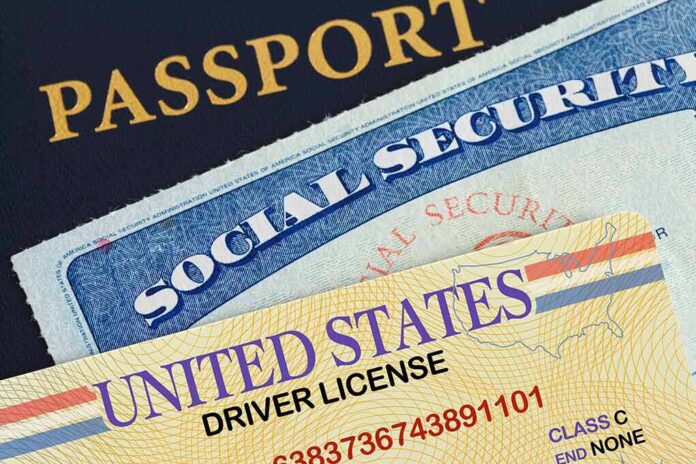
A Colombian national who stole an American’s identity to get a passport and vote for years is now headed to federal prison.
Story Highlights
- Federal judge sentenced Carlos Felipe Jaramillo-Grajales to three years in prison for identity and election crimes.
- Justice Department says he used a stolen name, birth date, and Social Security number to get documents and vote.
- Homeland Security amplified the case as a warning on identity theft and illegal voting.
- Researchers say noncitizen voting happens but at extremely low rates nationwide.
Federal Sentencing in Long-Running Identity and Voting Scheme
The United States Attorney’s Office for the Middle District of Florida said a federal judge sentenced Carlos Felipe Jaramillo-Grajales, 55, to three years in prison. Prosecutors said he made false statements on a passport application, committed aggravated identity theft, falsely used a Social Security number, and falsely claimed to be a United States citizen to vote. The case was announced in Jacksonville, Florida, and centered on activity over many years, according to the Justice Department release.
The Justice Department said Jaramillo-Grajales used a stolen identity to obtain official documents. Officials stated he relied on another person’s name, date of birth, and Social Security number to secure credentials and access voting. The sentence followed earlier charging documents linked to election-related violations, which federal prosecutors highlighted in public filings and announcements. Homeland Security officials later shared details of the sentence on social media to emphasize the consequences.
How the Fraud Worked and What Laws Were Broken
Prosecutors described a pattern where the defendant adopted a United States citizen’s identity to pass government checks. False claims on a passport application triggered federal scrutiny because passport fraud is a serious national security risk. Using someone else’s Social Security number is a separate felony. Claiming United States citizenship to vote breaks both federal election law and state-level rules that guard voter rolls. Each step compounded the harm to the victim and undermined trust in basic government systems.
Homeland Security officials summarized the conduct in a public post, saying the defendant stole an American’s identity and voted in elections. The message stressed that the crimes crossed several systems at once: motor vehicle records, federal identity checks, and voter registration processes. Agencies often coordinate in such cases, with identity theft leading investigators to look for voting violations tied to false citizenship claims. The public post framed the prison term as a signal that cross-system fraud will draw stiff penalties.
Why This Case Resonates Across the Political Divide
Many Americans worry that leaders let fraud and abuse slide while ordinary people pay the price. This case shows how identity theft can pierce core systems that citizens rely on for work, travel, and voting. Voters on the right see proof that illegal immigration and weak identity checks can reach the ballot box. Voters on the left see how poor safeguards harm victims and strain public services. Both sides see a government that often reacts late instead of preventing harm.
Election experts and public records show that noncitizen voting happens but at very low rates compared with total ballots cast. A Reuters analysis reported that officials from both parties acknowledge such cases exist but say the scale is too small to change outcomes. The key lesson for policy is to focus on precise identity checks and data sharing across agencies. That approach can stop rare but real cases without blocking eligible voters or slowing routine services.
Sources:
foxnews.com, yahoo.com, linkedin.com