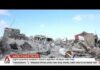
A powerful 7.5-magnitude earthquake struck northern Japan, prompting tsunami warnings and mass evacuations that revealed both the effectiveness of disaster preparedness and the ongoing vulnerability of a nation still haunted by the catastrophic 2011 Tohoku disaster.
Story Snapshot
- Magnitude 7.5 earthquake at shallow 10 km depth struck off Sanriku coast, triggering tsunami waves up to 80 cm and warnings of 3-meter waves
- Over 128,000 residents evacuated from coastal areas in Iwate, Aomori, and Hokkaido prefectures as authorities urged immediate evacuation to higher ground
- No major damage, injuries, or nuclear facility issues reported initially, contrasting sharply with 2011’s devastating 9.0 quake that killed over 20,000
- Shallow depth amplified shaking felt hundreds of miles away in Tokyo, with aftershock warnings issued for up to one week
Earthquake Strikes Vulnerable Coastline
The earthquake hit at approximately 4:53 p.m. local time on April 20, 2026, with its epicenter located off the northern coast near Sanriku at a depth of just 10 kilometers. The Japan Meteorological Agency immediately issued tsunami alerts, detecting an 80-centimeter wave at Kuji port in Iwate Prefecture within an hour, with secondary waves of 40 centimeters observed at another nearby port. The shallow depth of the quake intensified ground shaking, causing tremors to be felt as far south as Tokyo, hundreds of miles from the epicenter. Authorities warned residents to stay away from coastlines and rivers, emphasizing that tsunami waves could arrive repeatedly and unpredictably throughout the following hours.
Mass Evacuations and Emergency Response
Local governments in Iwate, Aomori, and Hokkaido prefectures issued non-binding evacuation advisories affecting more than 128,000 residents in coastal communities. NHK public broadcaster footage showed streams of vehicles heading to higher ground as maritime traffic was redirected and ships fled ports in response to the warnings. The Fire and Disaster Management Agency coordinated damage assessments while the Nuclear Regulation Authority confirmed that all nuclear facilities in the region remained intact and operational. The response demonstrated lessons learned from the 2011 Tohoku disaster, when inadequate evacuations contributed to over 20,000 deaths and triggered the Fukushima nuclear meltdown. Japan’s position on the Pacific Ring of Fire makes such preparedness essential, as the Pacific Plate continuously subducts beneath the Eurasian Plate along this seismically active coastline.
Echoes of Past Catastrophe
The Sanriku coast has endured repeated seismic trauma, most notably the magnitude 9.0 Tohoku earthquake on March 11, 2011, which struck approximately 100 kilometers off the same coastline. That disaster claimed more than 20,000 lives through massive tsunami waves and triggered the Fukushima Daiichi nuclear meltdown, fundamentally altering Japan’s approach to disaster management and nuclear safety. More recently, a December 8, 2025 earthquake in the same region generated 70-centimeter tsunamis and injured over 40 people, though it caused no major structural damage. The April 20 event’s preliminary magnitude varied slightly between 7.4 and 7.5 in early reports, reflecting the challenges of real-time seismic assessment, but both figures underscore the continuing threat facing northern Japan’s coastal communities.
The Japan Meteorological Agency urged residents to remain vigilant for aftershocks over the following week, warning that secondary tremors could still pose dangers even after the Pacific Tsunami Warning Center declared the immediate tsunami threat had passed. While no injuries, deaths, or significant infrastructure damage were reported in the initial hours, authorities continued monitoring for delayed impacts. The incident reinforces critical questions about long-term resilience in earthquake-prone regions where even robust government emergency systems cannot eliminate risk entirely. For coastal residents whose livelihoods depend on fishing and maritime industries, temporary shutdowns and repeated evacuations impose economic burdens that underscore the precarious balance between safety and sustaining traditional ways of life in a nation shaped by geological forces beyond human control.
Sources:
Major 7.5-Magnitude Earthquake Strikes off Japan, Triggers Tsunami Alert – The National Desk
Tsunami Warning as 7.4 Magnitude Quake Hits Northern Japan – Daily Sun
Japan Meteorological Agency – Disaster Prevention Map